
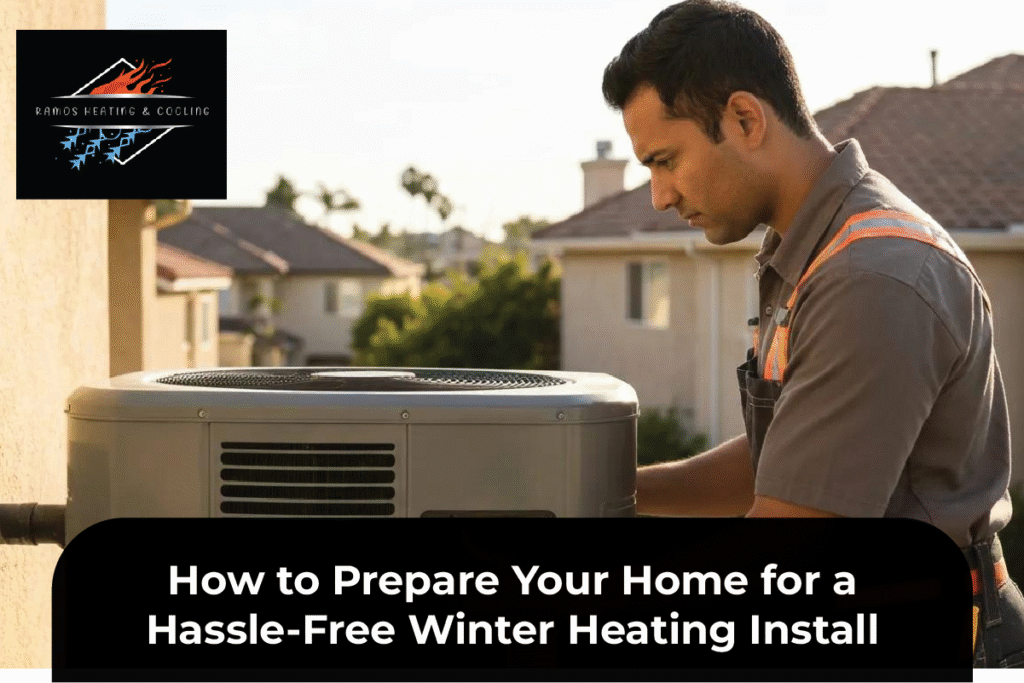
As winter approaches, getting your home ready for a smooth, hassle-free heating installation is more critical than ever. Whether you’re planning a winter furnace installation, a cold-weather heat pump install, or a pre-winter boiler installation, proper preparation can save you time, money, and unnecessary stress. Homeowners often underestimate how much easier and faster a heating install can be when the home is well organized, clutter-free, and properly evaluated beforehand. And honestly, who doesn’t want a warm home without last-minute chaos?
Additionally, preparing early ensures you’re not dealing with an emergency winter heater install, which typically costs more and is harder to schedule. By taking a few proactive steps, you can ensure your seasonal heating setup goes smoothly and your home stays comfortable all winter long. Below, you’ll find practical, easy-to-follow steps to help you get your home and your family ready for a successful heating system upgrade.
Clear the Installation Area for Easy Access
When technicians arrive for your local winter HVAC installation, they’ll need plenty of space to work around your furnace, boiler, or heat pump. A cluttered workspace slows down the process and may even cause delays. This is why clearing out storage boxes, tools, furniture, and debris from the installation area is essential.
In most homes, heating equipment is located in basements, closets, mechanical rooms, or garages. Walk through these areas and remove anything that might block tools, equipment, or technician movement. A tidy space not only speeds up installation but also ensures your technician works safely and efficiently.
Beyond removing clutter, consider sweeping the area or vacuuming dust. While it may seem minor, a clean environment helps installers complete the job more accurately and prevents dust from entering your new heating system.
Check Ventilation and Airflow Pathways
Good airflow is crucial for any energy-efficient winter heating setup. Your vents, registers, and ductwork must be in good condition to handle the new system. Before installation day, walk through your home and ensure rugs, decor, or furniture do not block vents.
You should also open all supply and return vents, even in unused rooms, to ensure your new system circulates air evenly. Restricted airflow can cause system stress and increase energy bills. If you suspect a duct leak or blockage, schedule a quick inspection with your technician before installation day.
Proper ventilation also matters around the installation site. Furnaces and boilers need adequate space for combustion air and exhaust ventilation. If your area is too tightly enclosed, your installer may need to adjust the setup or recommend modifications.
Evaluate Electrical and Gas Line Requirements
Every successful fall heating system replacement depends on the home’s electrical and gas configurations. Many older homes don’t have the proper connections required for modern energy-efficient heating systems. Before installation day, check or ask your installer to verify that:
- Gas lines are accessible and functioning properly
- Electrical panels have enough capacity
- Shutoff valves are secure and operational
- The thermostat wiring supports advanced or smart thermostats
If you’re switching from a furnace to a heat pump or upgrading to a high-efficiency boiler, these electrical and gas requirements become even more critical. Taking care of them early prevents last-minute surprises that delay installation.
Ensure Safe Pathways for Technicians
A smooth installation depends on easy access, not just to the equipment area but throughout your home. Think about how the technicians will bring tools, materials, and the new unit inside. Clear hallways, stairways, and doorways of shoes, storage bins, furniture, and anything else that could get in the way.
Snow, ice, and mud can also create slip hazards. If winter weather has already arrived, shovel walkways, salt icy surfaces, and ensure your driveway is not blocked. A safe, accessible home helps technicians work quickly and minimizes risks.
Additionally, secure pets in a separate room. While pets are part of the family, they can accidentally get in the way of tools or equipment, which can be dangerous for both the animal and the technician.
Review System Location and Upgrade Plans
Before your seasonal heating setup begins, walk through your home with your installer to review the exact location and layout of your new heating unit. Whether it’s a furnace, heat pump, or boiler, understanding where it will be positioned helps you prepare your home more effectively.
Ask your technician questions such as:
- Will the new unit fit in the same place as the old one?
- Does ductwork need modifications?
- Will the installation require drilling or carpentry work?
- Do you need to move any items from nearby walls or shelves?
If your installation requires outdoor components, such as a cold-weather heat pump, make sure the technician has clear access to the backyard, side yard, or outdoor unit location. Remove snow, trim shrubs, and relocate items blocking the planned installation path.
Improve Your Home’s Energy Efficiency Before Installation
A new heating system is only as efficient as the home it operates in. Before installation day, take steps to reduce heat loss and maximize comfort. The more energy-efficient your home is, the better your new system will perform.
Here are some helpful upgrades to consider:
- Seal gaps around windows and doors
- Add insulation in your attic and basement
- Install weatherstripping or door sweeps
- Replace aging thermostats with programmable or smart technology
- Schedule a duct inspection for possible leaks
These improvements help you get the most out of your energy-efficient winter heating equipment and can even lower utility bills right from the start.
Coordinate with Your HVAC Company Ahead of Time
Communication is key. A day or two before installation, confirm your appointment time, estimated duration, and any preparation steps your HVAC company recommends. Reliable companies like Ramos Heating & Cooling offer clear guidance to homeowners.
Providing your technician with information about your home’s layout, access points, and previous heating issues helps them personalize the installation for maximum performance.
Final Thoughts
Preparing your home for a smooth, hassle-free winter heating installation doesn’t have to be complicated. With a bit of planning, organization, and communication, you can ensure the entire process runs efficiently. From clearing the installation area to verifying electrical and gas connections, every step you take beforehand contributes to a faster, safer, and more reliable heating setup. The goal is simple: a warm, cozy home without installation delays or surprises.
Taking time to prepare now means you’ll enjoy stress-free comfort all winter long, no last-minute repairs, no emergency replacements, and no unexpected expenses, just reliable heat when you need it most.
FAQs
1. How far in advance should I prepare for a winter heating installation?
Ideally, you should begin preparing 1–2 weeks before the appointment to allow time for inspections, cleaning, and clearing access areas.
2. Do I need to be home during the installation?
Yes, most HVAC companies require the homeowner to be present to approve placement, answer questions, and complete paperwork.
3. How long does a winter furnace or heat pump install take?
Most installations take 4 to 8 hours, depending on system size, location, and whether ductwork modifications are needed.
4. Should I upgrade my thermostat during installation?
Yes, upgrading to a smart or programmable thermostat helps maximize efficiency and comfort during cold weather.
5. What should I do after the installation is complete?
Check the thermostat settings, inspect the airflow from the vents, and ask your technician for maintenance tips specific to your new system.