
Building a new home or remodeling an old one is exciting. You get to design everything your way, the layout, the finishes, the lighting, and of course, the comfort. But here’s something many homeowners overlook until it’s too late: heating.
Heating isn’t just about staying warm in winter. It affects your monthly bills, indoor air quality, resale value, and daily comfort. A poorly planned system can leave rooms cold, raise energy costs, and overwork equipment. On the other hand, thoughtful heating installation planning delivers consistent warmth, improved efficiency, and long-term savings.
Whether you’re working on a brand-new construction or upgrading an older property, this guide walks you through exactly how to plan a new home heating installation the right way. We’ll keep things simple, practical, and homeowner-friendly, with expert tips you can actually use.
Let’s break it down step by step so you can build smarter, not warmer by accident.
Start With a Smart Heating Plan, Not Just Equipment
Before choosing a furnace or heat pump, take a step back and think about the whole home. Heating systems work best when they’re planned alongside insulation, ductwork, windows, and room layout.
Too often, homeowners pick equipment first and design later. That’s backward. Instead, work with your contractor early in the design phase. When your heating system installation in new construction is planned from day one, you avoid costly retrofits and messy changes later.
Also, every home is different. Square footage alone isn’t enough to size a system—ceiling height, insulation levels, sun exposure, and airflow all matter. A proper load calculation ensures your system isn’t too big or too small, because both waste energy and money.
Simply put, thoughtful planning saves you years of frustration.
Choose the Right System for Your Lifestyle
Not every home needs the same heating solution. Your climate, budget, and comfort preferences should guide your decision.
For example, a furnace installation in a new home works well in colder states, where gas heating is reliable and fast. Furnaces heat quickly and deliver powerful airflow, making them a popular and affordable option. Meanwhile, homeowners seeking energy efficiency often prefer a heat pump installation in a new home, which both heats and cools using less energy.
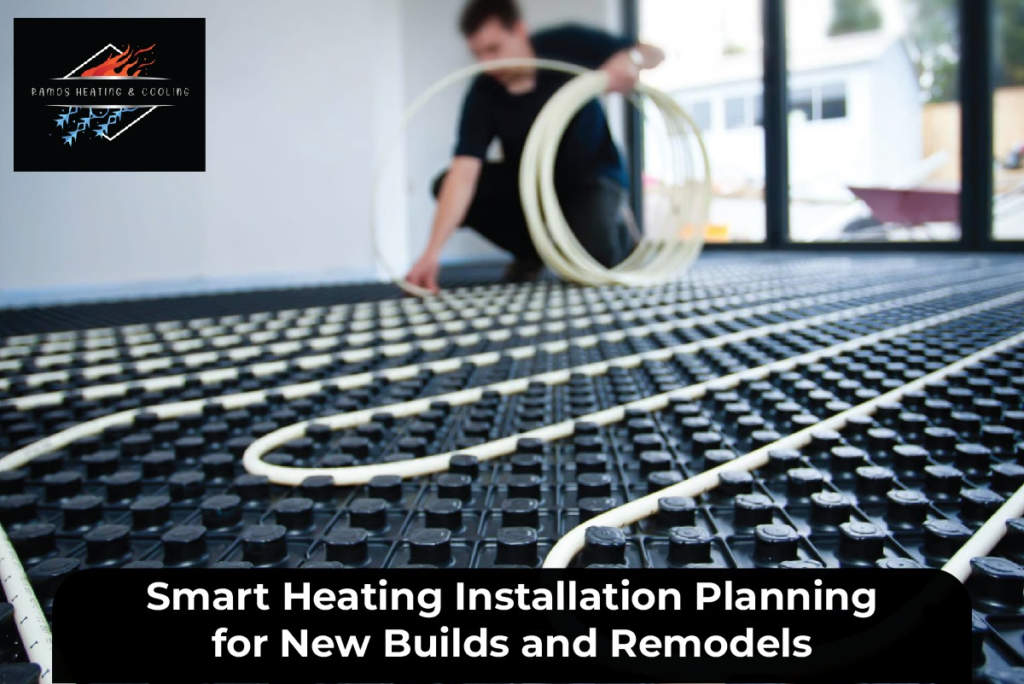
If you want consistent radiant warmth, a boiler installation in a new home might be ideal. Boilers heat water instead of air and provide quiet, even heat through baseboards or radiant floors.
Think about:
- Energy efficiency ratings
- Installation costs
- Long-term savings
- Noise levels
- Maintenance needs
The right system should match how you actually live, not just what’s trending.
Design Ductwork and Airflow the Smart Way
Even the best heater will fail if the airflow is poor.
During planning for your new-build heating system, duct design plays a significant role in comfort. Bad duct placement causes uneven temperatures, noisy airflow, and energy loss. Unfortunately, many builders treat ductwork like an afterthought.
Instead, make it a priority. Properly sealed and insulated ducts prevent heat loss and improve efficiency. Additionally, strategically placed vents ensure every room remains comfortable, not just the ones closest to the unit.
If you’re remodeling, this is your opportunity to address old duct issues. Replacing outdated or leaking ducts during renovation is far cheaper than doing it later.
Good airflow equals better comfort. It’s that simple.
Integrate Smart Technology for Better Control
Today’s heating systems are more intelligent than ever, and you should take advantage of them.
Smart thermostats allow you to control temperatures from your phone, set schedules, and track energy usage. That means less waste and more savings. Some systems even learn your habits automatically.
During your central heating installation in your new home, ask about zoning options as well. Zoning divides your home into different temperature areas. So, instead of heating the whole house, you heat only the rooms you use.
This approach:
- Lowers energy bills
- Improves comfort
- Extends equipment life
- Reduces strain on the system
Smart tech isn’t a luxury anymore, it’s a practical investment.
Plan for Energy Efficiency From Day One
Heating efficiency doesn’t start with the heater. It begins with the house itself.
Before finalizing your heating installation for new homes, ensure the building envelope is airtight. Insulation, windows, and air sealing matter just as much as the equipment.
If your home leaks warm air, even the most efficient system can’t keep up. That’s like pouring water into a bucket with holes.
Focus on:
- High R-value insulation
- Energy-efficient windows
- Sealed doors
- Proper attic insulation
- Air sealing gaps and cracks
When your home retains heat more effectively, your system runs less, resulting in lower bills and longer equipment life.
Efficiency starts with innovative construction, not just intelligent machines.
Don’t Skip Professional Installation
DIY might work for painting walls or installing shelves, but heating systems are different.
Improper installation can lead to gas leaks, carbon monoxide risks, poor efficiency, and expensive repairs. That’s why hiring certified professionals is critical for any new home heating installation.
Experienced technicians properly size equipment, ensure safe connections, and test performance. They also help you understand maintenance and warranty coverage.
If you’re in Wisconsin, working with trusted experts like Ramos Heating & Cooling makes the process easier and stress-free:
Professional installation isn’t an expense; it’s protection for your investment.
Future-Proof Your Heating System
A home isn’t just for today. It’s for the next 10–20 years.
So, think ahead. Maybe you’ll add a basement, finish the attic, or build an extension. Your heating system should handle future upgrades without replacement.
When planning your heating system installation in new construction, choose slightly flexible capacity and space for expansion. Adding extra duct lines or electrical capacity now costs far less than tearing walls later.
Also, consider hybrid systems that combine a furnace with a heat pump. These systems automatically switch energy sources based on weather, saving money and improving reliability.
Future-proofing today prevents headaches tomorrow.
Work With Experts Early for a Smooth Remodel
Remodels are trickier than new builds because you’re working around existing structures.
Walls, ceilings, and existing ductwork can limit your options. That’s why early consultation matters. Involve HVAC professionals during the design stage, not after demolition.
They’ll help determine whether to replace, upgrade, or relocate equipment. Sometimes, keeping parts of the old system works. Other times, starting fresh is smarter.
Either way, expert planning ensures your central heating installation, whether in a new home or during a remodel, runs smoothly without surprises.
Early coordination saves time, money, and stress.
Final Thoughts
Heating isn’t just another checkbox in your construction plan. It’s the heart of your home’s comfort.
When you take time to plan your new build heating system, choose the right equipment, improve airflow, and work with professionals, you create a home that stays cozy, efficient, and affordable year-round.
So don’t rush it. Think long-term. Invest smartly.
Because when winter hits, you’ll be glad you did.
FAQs
How early should I plan my heating installation for new homes?
Ideally, during the design phase. Early planning allows better duct placement and system sizing.
Is a heat pump better than a furnace for new construction?
It depends on the climate and energy costs. Heat pumps are efficient in mild climates, while furnaces perform better in extreme cold.
How long does a new-furnace installation in a new home take?
Most installations take one to two days, depending on system complexity and the extent of ductwork.
Do I really need professional installation?
Yes. Professional installation ensures safety, efficiency, and warranty protection.
Can I add smart thermostats later?
Yes, but installing them during construction is easier and more cost-effective.
How often should a new heating system be maintained?
Schedule professional maintenance annually to maintain high performance and prevent breakdowns.