
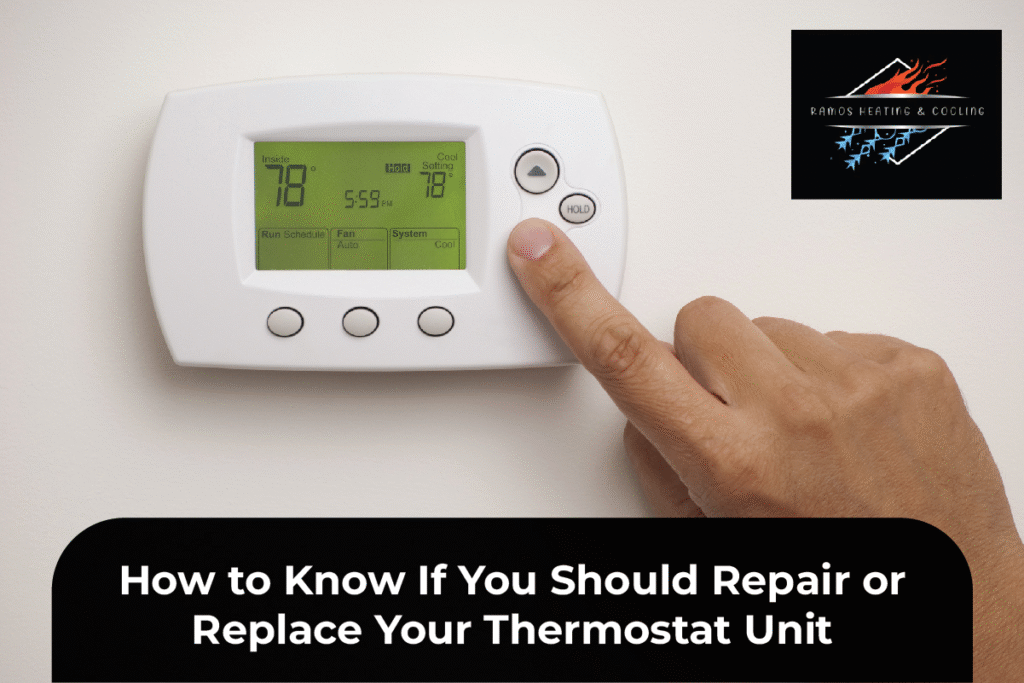
Your thermostat has one job: keep your home comfortable without wasting energy. But when your heating or cooling starts acting up, the thermostat often becomes the first suspect. Many homeowners assume that when the system stops responding, the entire HVAC unit is failing. Surprisingly, it’s usually the thermostat causing trouble. That raises a big question: Should you repair your thermostat, or is it time to replace the thermostat completely?
This guide will walk you through everything you need to know, including symptoms, signs of repair or replacement, costs, benefits, and when a thermostat upgrade is the more brilliant move. The goal is to help you understand your options in a simple, humanized, and easy-to-read way while still giving you expert-level insight. Whether you’re dealing with an outdated manual thermostat, an inconsistent digital thermostat, or considering a smart thermostat replacement, this blog helps you make the right call with confidence.
1. Understanding How Your Thermostat Actually Works
Your thermostat acts like the brain of your HVAC system. It sends signals to your heating and cooling equipment, telling it when to turn on or off. When it fails, the entire system can feel broken, even when it’s not.
Many people jump straight into significant repair costs without checking the thermostat first. Because thermostats are small but mighty, knowing how they work helps you make smarter decisions.
Most thermostats include temperature sensors, electrical connections, and communication circuits. When any of these weaken or fail, they cause incorrect readings, constant cycling, or complete system shutdowns. Sometimes a simple thermostat change fixes everything. Other times, a complete thermostat replacement is the best long-term move, especially if your thermostat is more than 10 years old.
2. Common Signs Your Thermostat Needs a Repair, Not a Replacement
Before assuming the worst, several thermostat issues are easy and affordable to repair. Recognizing these signs can save you unnecessary replacement costs.
Your Thermostat Has Loose or Frayed Wiring
Older thermostats often develop wiring issues due to age, vibrations, or dust buildup. A technician can tighten connections, clean terminals, or reattach wires. If the thermostat is relatively new, a quick repair is usually enough.
Temperature Readings Are Slightly Inaccurate
Minor misreadings can come from sensor drift, dirt buildup, or calibration loss. A simple recalibration or cleaning often fixes the problem. In these cases, a new thermostat installation isn’t required yet.
When these signs appear, repairing your thermostat can extend its life without breaking the bank. However, not all problems are “repair-worthy,” especially when the thermostat becomes unreliable.
3. Clear Signs It’s Time to Replace Your Thermostat Completely
When your thermostat becomes outdated, unresponsive, or incompatible with modern HVAC systems, repairing it no longer makes sense. Here are red flags indicating a complete thermostat replacement rather than repair.
Your HVAC System Short-Cycles Constantly
If your furnace or AC turns on and off rapidly, the thermostat may be malfunctioning. As this issue worsens, a thermostat upgrade becomes unavoidable.
Your Thermostat Is Over 10–12 Years Old
Technology moves fast. Older units often struggle to communicate efficiently with modern HVAC systems. In these cases, replacing a programmable thermostat with a smart thermostat improves energy use instantly.
Unresponsive Buttons or Blank Display
If the display freezes, lags, or goes blank repeatedly, internal circuits are failing. Instead of spending money to repair outdated hardware, opting for an HVAC thermostat swap is usually more innovative and reliable.
4. Benefits of Replacing Your Thermostat Instead of Repairing It
When you choose to replace the thermostat, you’re not just fixing a problem; you’re improving home comfort, efficiency, and long-term savings.
Energy Savings and Lower Utility Costs
Smart and programmable thermostats adjust temperatures automatically. They learn your habits, reduce energy waste, and cut utility bills effortlessly. A thermostat upgrade often pays for itself within a year.
Better Compatibility With New HVAC Equipment
If you recently installed a new heating or cooling system, an old thermostat may not communicate correctly. A new thermostat installation ensures smoother operation, better temperature control, and increased equipment lifespan.
Switching to a modern thermostat brings comfort, convenience, and peace of mind, things older thermostats struggle to deliver.
5. When Repairing Your Thermostat Is Still the Better Option
Even though replacements offer many benefits, sometimes repairing your thermostat is the most sensible choice.
Your Thermostat Is Relatively New
If your thermostat is under five years old, replacing it entirely may not make financial sense. Minor repairs or recalibration often bring it back to life.
Simple Fixes Solve the Issue
Sometimes the problem is low battery power, loose screws, a dust blockage, or a tripped breaker. These quick fixes cost almost nothing and restore full functionality.
Before spending money, always rule out the simple causes. If repairs are less than 40% of the cost of a new thermostat, repairing is usually the right choice.
6. When Replacing Your Thermostat Offers the Most Value
Certain situations make replacing the thermostat the obvious, more rewarding decision.
You Want Smart Features and App Control
Modern smart thermostats allow Wi-Fi access, scheduling, automation, and energy reports. If convenience matters, a smart thermostat replacement option offers long-term value.
You’re Upgrading Your Entire HVAC System
A thermostat change ensures the new equipment works efficiently. Many homeowners forget that outdated thermostats limit system performance, causing comfort issues.
If you want the perfect balance of comfort and savings, replacing the thermostat becomes the best strategy.
7. Professional Help vs. DIY: What’s the Better Option?
A thermostat may look simple, but installation affects your entire HVAC system. One wrong wire or configuration mistake can cause furnace failure, AC shutdown, or electrical hazards.
Why Professional Service Is Safer
Professionals ensure proper wiring, accurate placement, correct voltage handling, and system compatibility. They also offer fast diagnostics to help you decide between repair and thermostat replacement.
DIY Can Work, but Only in Simple Cases
If you’re swapping an older digital thermostat for another basic model, DIY may be fine. However, for innovative systems or programmable thermostat replacement, professional installation ensures long-term reliability.
For expert thermostat services.
Final Thoughts
A malfunctioning thermostat can disrupt your comfort and increase energy bills, but knowing whether to repair or replace your thermostat unit helps you make smarter decisions. Repairs work well for newer thermostats with minor issues. However, when your thermostat is outdated, inconsistent, or incompatible with modern HVAC equipment, replacing it is the better move.
A thermostat upgrade not only enhances comfort but also boosts efficiency and saves money in the long term. Use the signs in this guide to confidently determine your next step, and when in doubt, call a professional to inspect your system.
FAQs
1. How long does a thermostat usually last?
Most thermostats last 10 to 12 years, depending on usage and maintenance.
2. Does replacing a thermostat improve my HVAC efficiency?
Yes. A thermostat replacement often improves temperature accuracy and reduces energy waste.
3. Should I replace the thermostat when upgrading my HVAC system?
Absolutely. A new HVAC thermostat swap ensures compatibility and smoother performance.
4. Are smart thermostats worth it?
Yes, especially for homeowners who want energy savings, automation, and remote control features.
5. Can a faulty thermostat damage my HVAC system?
Yes. Constant short cycling and incorrect signals can strain your furnace or AC over time.